
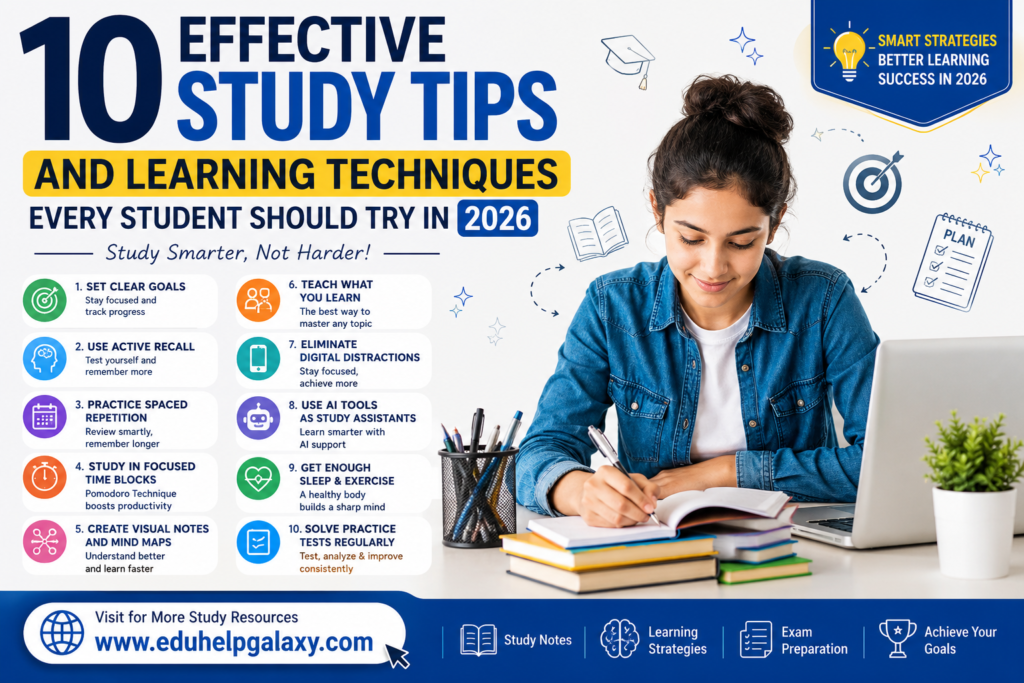
10 Effective Study Tips and Learning Techniques Every Student Should Try in 2026
Introduction
Studying effectively is no longer about spending long hours with textbooks and highlighting every line on a page. In 2026, students have access to modern learning methods, AI-powered tools, digital resources, and proven study techniques that can make learning faster, smarter, and more enjoyable.
Many students work hard but still struggle to remember information during exams. The problem is often not the amount of time spent studying but the way they study. By using the right techniques, students can improve concentration, retain information longer, reduce stress, and achieve better academic results.
Whether you are preparing for school exams, college entrance tests, board examinations, or competitive exams, these 10 effective study tips can help you become a smarter learner.
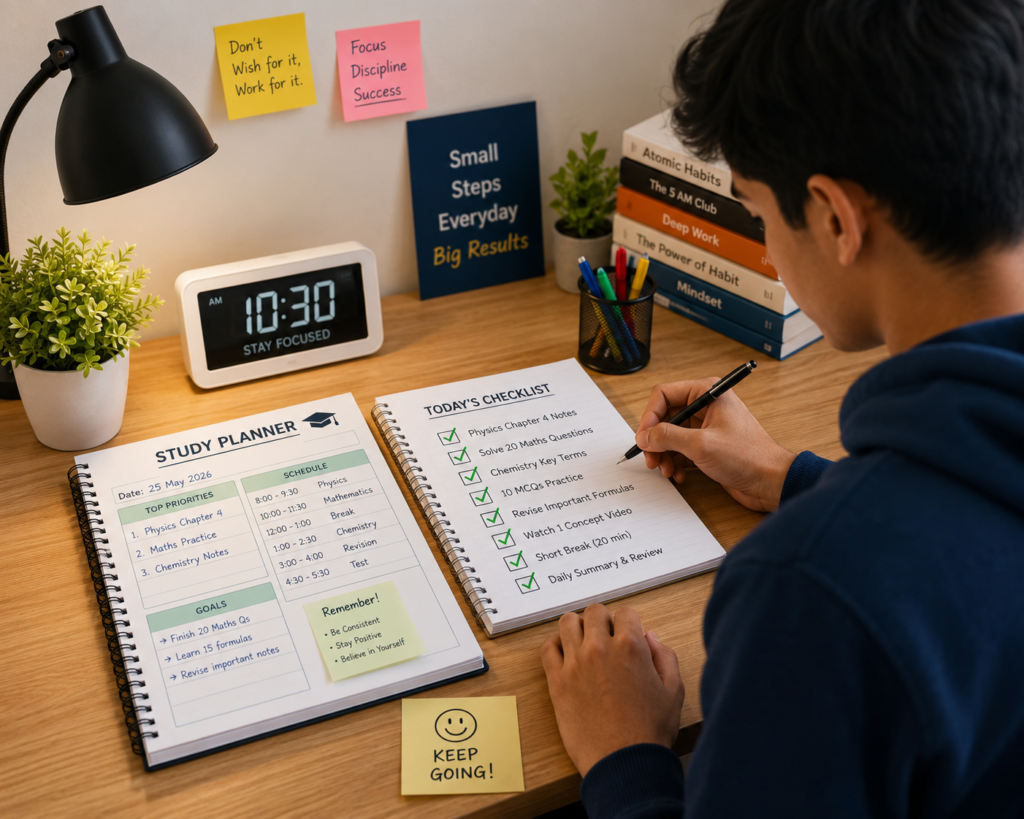
1. Set Clear Study Goals Before Every Session
One of the biggest mistakes students make is sitting down to study without a clear objective. When you don’t know exactly what you want to achieve, your study session becomes less productive.
Before starting, write down specific goals such as:
- Complete Chapter 5 Biology Notes
- Solve 20 Mathematics Questions
- Memorize 15 Chemistry Definitions
- Review History Timeline
Having clear goals keeps your mind focused and helps you track your progress.
Example
Instead of saying:
❌ “I will study Physics.”
Say:
✅ “I will complete Newton’s Laws and solve 10 related problems.”
Students who set measurable goals often stay motivated because they can clearly see their achievements.
2. Use Active Recall Instead of Passive Reading
Many students repeatedly read the same chapter and believe they are learning. Unfortunately, passive reading is one of the least effective study methods.
Active Recall forces your brain to retrieve information from memory.
After reading a topic:
- Close the book.
- Write down everything you remember.
- Answer questions without looking at notes.
- Explain concepts aloud.
This process strengthens memory and improves long-term retention.
Example
After studying “The Human Digestive System,” close your notebook and draw the digestive organs from memory.
You will quickly identify what you know and what needs further review.

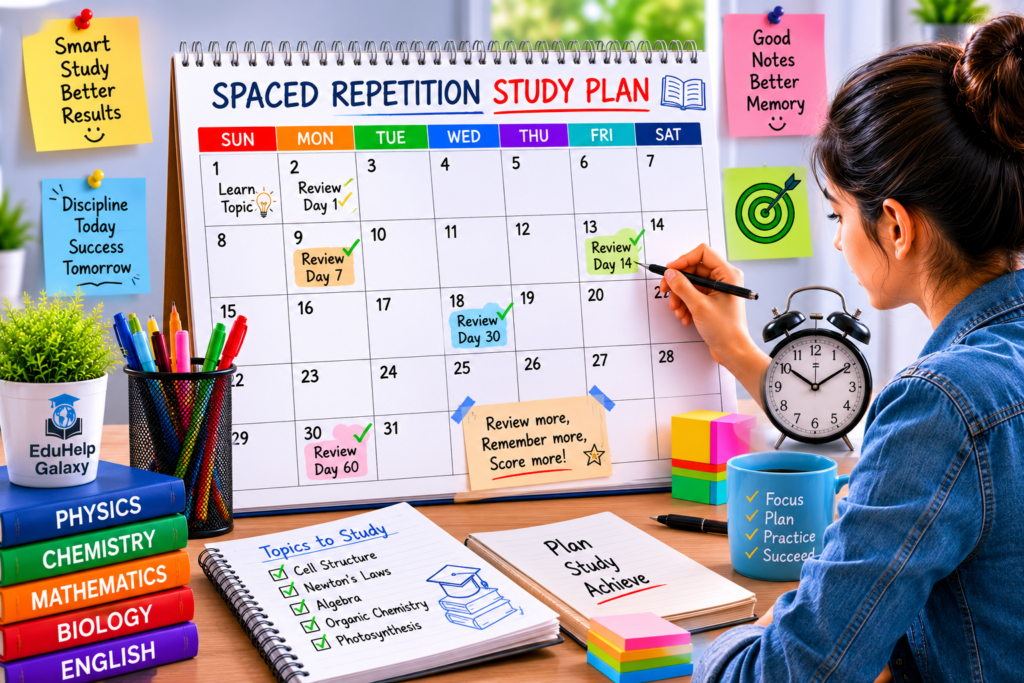
3. Practice Spaced Repetition
Spaced Repetition is a scientifically proven learning method that helps students remember information for months or even years.
Instead of studying everything in one day, review the same material at increasing intervals.
Suggested Review Schedule:
- Day 1: Learn Topic
- Day 2: First Review
- Day 7: Second Review
- Day 14: Third Review
- Day 30: Final Review
This method prevents forgetting and reduces last-minute cramming before exams.
Example
A student learning Chemistry formulas reviews them multiple times over several weeks rather than trying to memorize them overnight.
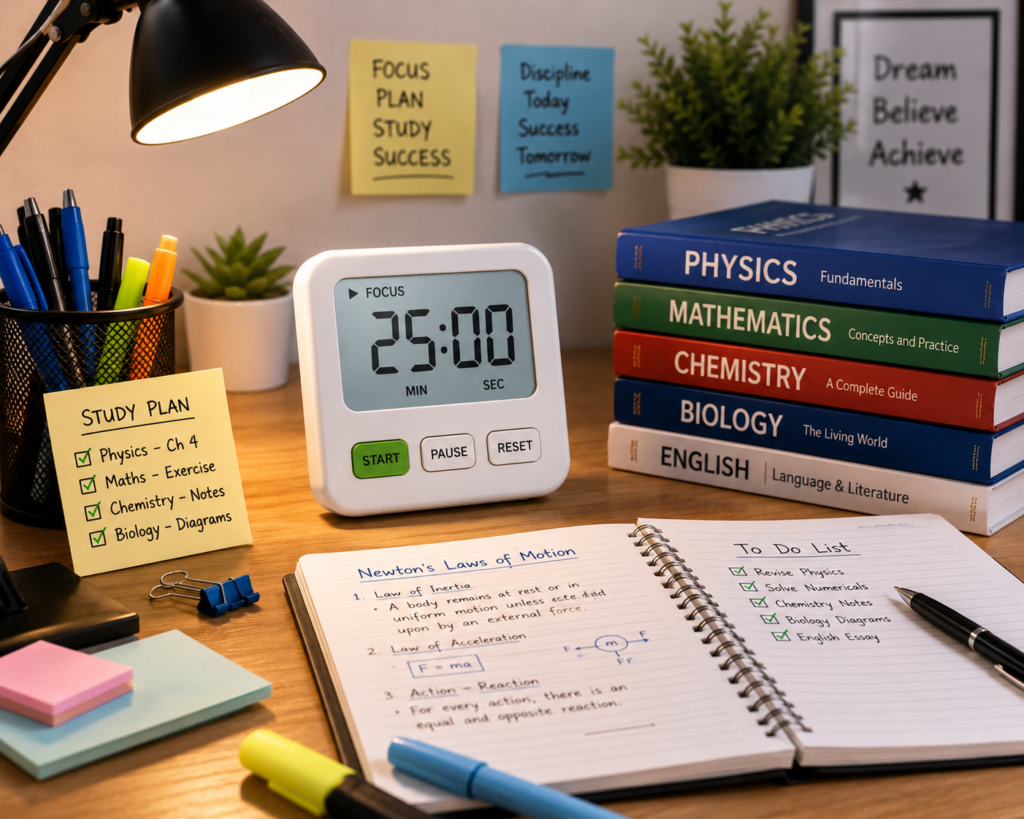
4. Study in Focused Time Blocks (Pomodoro Technique)
Long study sessions often lead to mental fatigue and reduced concentration.
The Pomodoro Technique helps maintain focus by breaking study time into manageable intervals.
Recommended Method:
- Study for 25 minutes
- Take a 5-minute break
- Repeat four times
- Take a longer 20-minute break
This technique keeps your brain fresh and prevents burnout.
Example
A student preparing for exams studies Mathematics for 25 minutes, takes a short walk, then returns refreshed.
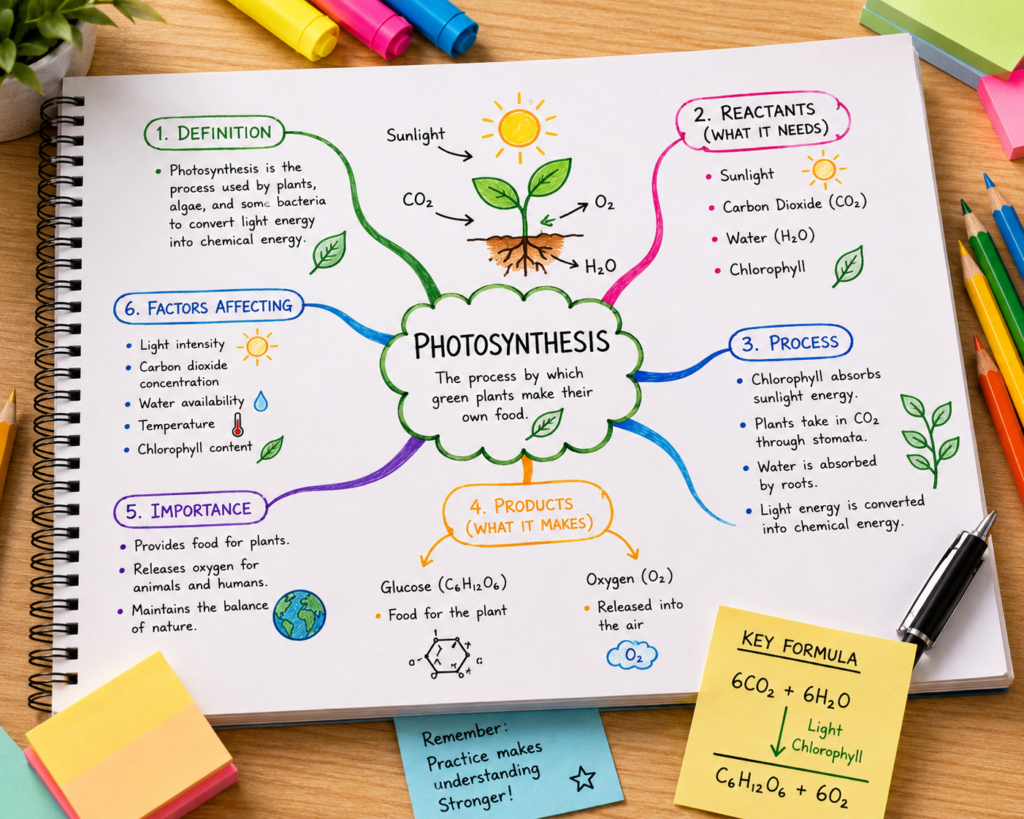
5. Create Visual Notes and Mind Maps
Visual learning helps students understand complex topics more easily.
Mind maps organize information using:
- Keywords
- Colors
- Arrows
- Images
- Branches
This makes studying more engaging and improves understanding.
Example
For a chapter on Climate Change:
Central Topic:
Climate Change
Branches:
- Causes
- Effects
- Solutions
- Global Impact
Students can see the entire concept on a single page.
6. Teach What You Learn
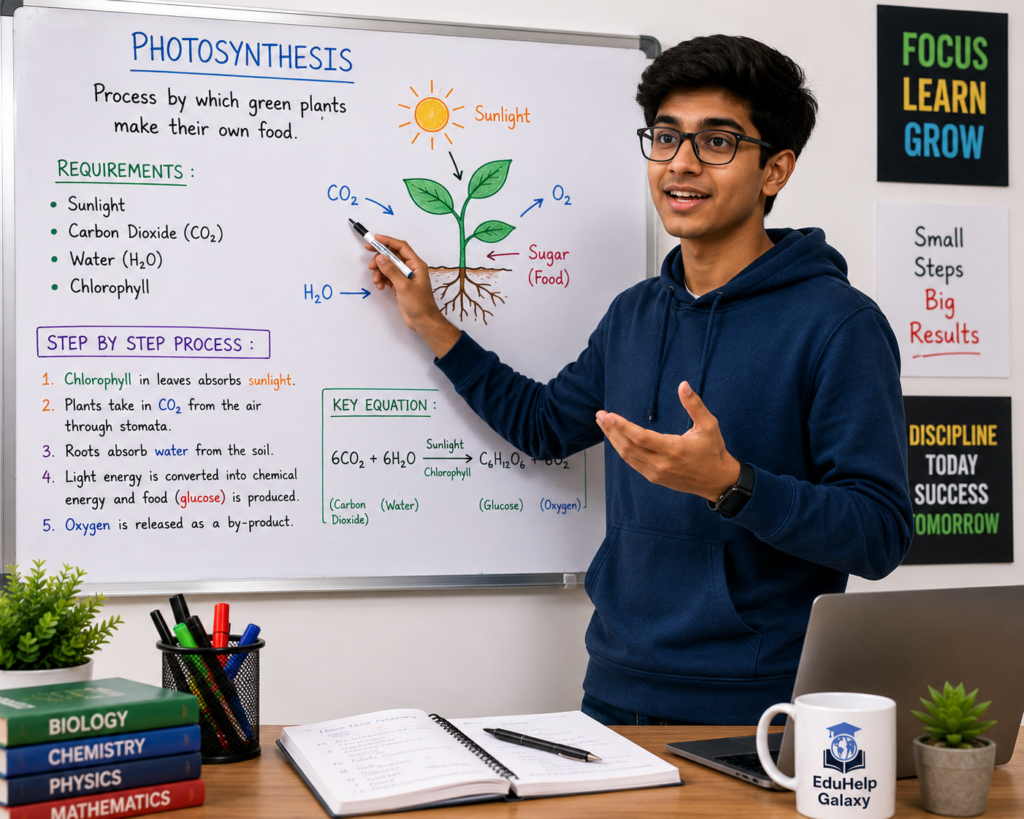
One of the most effective learning methods is teaching.
If you can explain a concept simply, it means you truly understand it.
Try teaching:
- Friends
- Family members
- Classmates
- Yourself in front of a mirror
This technique reveals knowledge gaps and strengthens understanding.
Example
After learning Algebra, explain the chapter to a younger sibling using simple language.
7. Eliminate Digital Distractions
Smartphones are one of the biggest productivity killers for students.
Research shows that frequent notifications interrupt concentration and reduce learning efficiency.
To stay focused:
- Turn off notifications
- Use Focus Mode
- Keep your phone away
- Use website blockers if needed
Example
A student places their phone in another room while studying for exams.

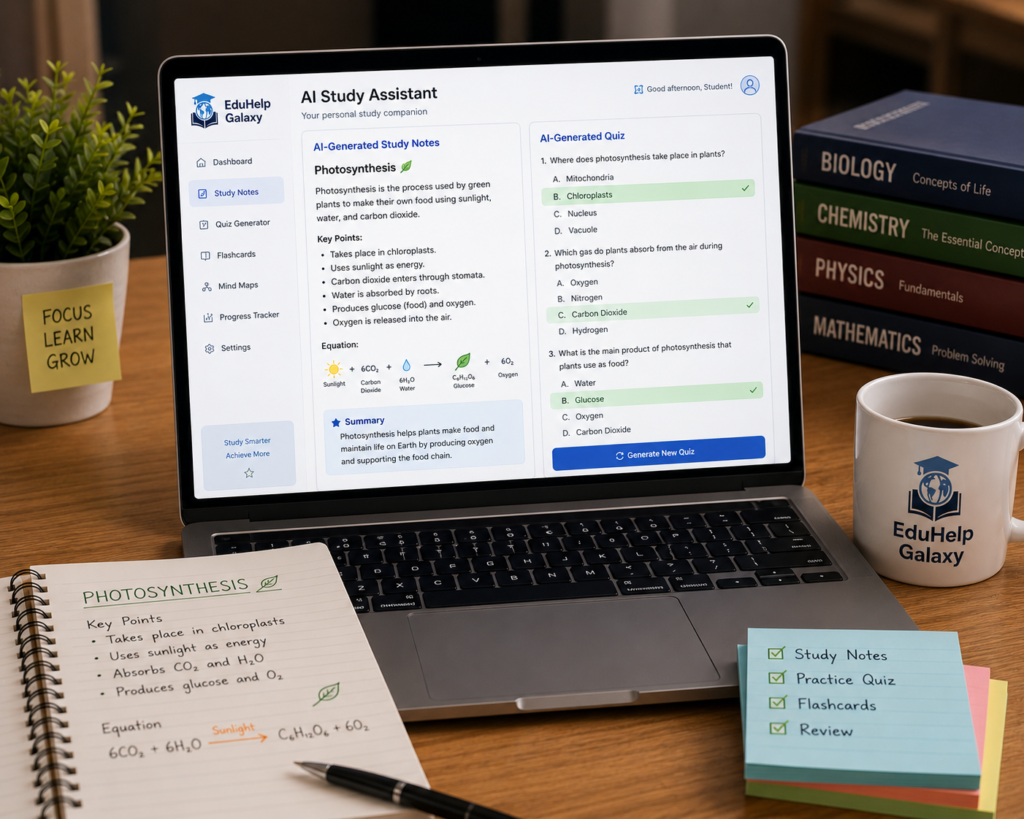
8. Use AI Tools as Study Assistants
In 2026, students can use AI responsibly to improve learning.
AI tools can help:
- Summarize chapters
- Generate quizzes
- Explain difficult concepts
- Create flashcards
- Improve writing skills
However, AI should support learning—not replace it.
Example
A student uploads lecture notes to an AI study assistant and receives practice questions for revision.
9. Get Enough Sleep and Exercise
Many students sacrifice sleep to study longer.
Unfortunately, sleep deprivation reduces memory, concentration, and problem-solving ability.
Healthy habits include:
- 7–9 hours of sleep
- Daily physical activity
- Proper hydration
- Balanced nutrition
Your brain performs best when your body is healthy.
Example
A student who sleeps eight hours remembers information better than someone who studies all night.

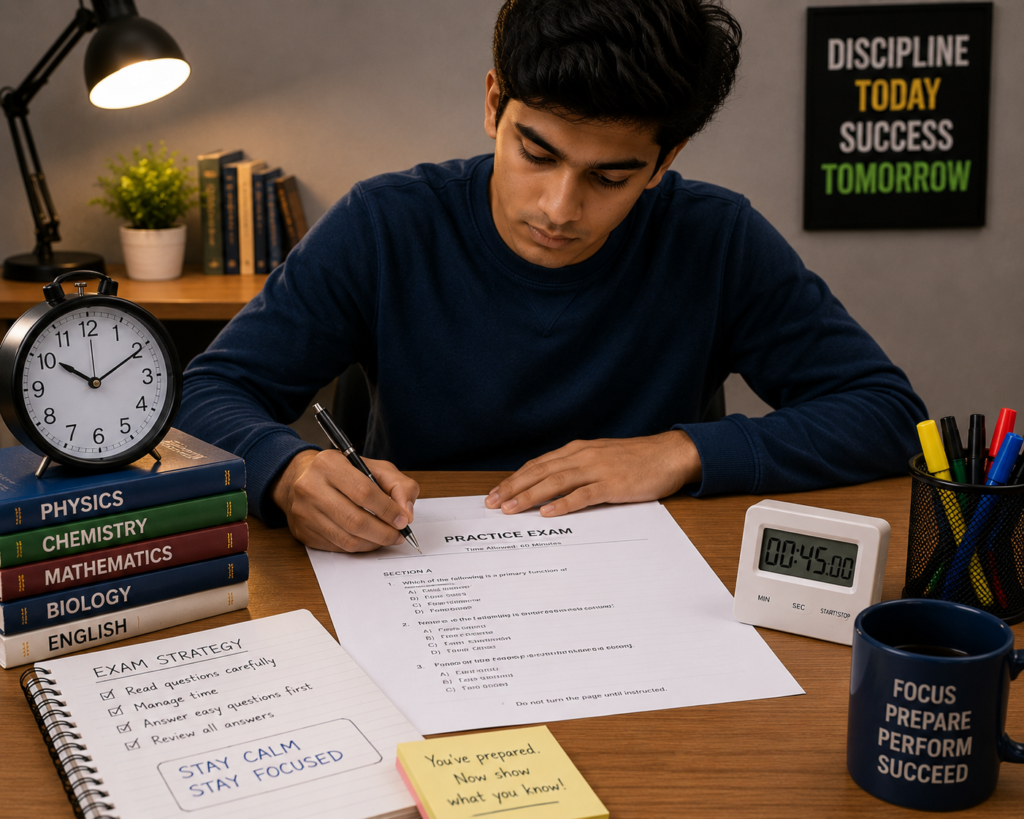
10. Solve Practice Tests Regularly
Practice tests are one of the best ways to prepare for exams.
Benefits include:
- Identifying weak areas
- Improving time management
- Reducing exam anxiety
- Building confidence
The more questions you solve, the more familiar you become with exam patterns.
Example
A student preparing for board exams completes one mock test every weekend and reviews mistakes afterward.
Final Thoughts
Success in academics is not about studying harder—it’s about studying smarter. By applying these 10 effective study tips and learning techniques, students can improve focus, remember information longer, reduce stress, and achieve better results in 2026.
Start by implementing one or two techniques this week. Once they become habits, gradually add more strategies. Small improvements made consistently can lead to remarkable academic success.
Remember, the best students are not always the ones who study the longest—they are the ones who use the most effective learning methods.